Reducing Carbon Footprint in Chemical Plants
A Techno-Economic Analysis of Renewable Energy Integration
Project Abstract
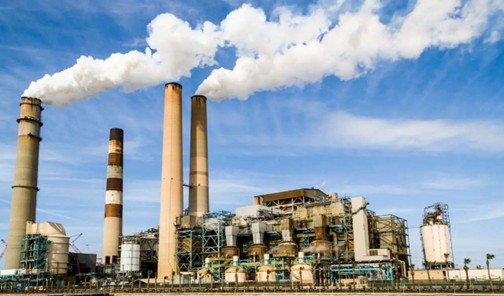
The chemical industry is a major contributor to global carbon emissions, accounting for over two gigatons of CO₂ equivalent annually. This project investigates the integration of renewable energy sources—such as solar, wind, and green hydrogen—to significantly reduce the carbon footprint of chemical plants, focusing on high-impact areas like ammonia (34.2% of emissions) and petrochemicals (21.2%).
An engineered model was developed to project a 12-15% reduction in overall carbon emissions by integrating a solar-thermal hybrid system, validated through a comprehensive techno-economic analysis and lifecycle assessment. The findings show that renewable integration is a critical and viable pathway toward sustainable chemical manufacturing.
Core Analysis & Methodology
Renewable Integration Model
Engineered a model to simulate integrating technologies like solar PV, wind, and green hydrogen. The model evaluated technical readiness levels (TRL) and emission reduction potential for each pathway.
Techno-Economic Analysis
Analyzed financial viability by comparing the cost per ton of CO₂ avoided for each technology—from $90 for process intensification to $250 for carbon capture. Also evaluated financing mechanisms like PPAs.
Lifecycle Assessment (LCA)
Conducted an LCA to quantify the total environmental impact, assessing Scope 1, 2, and 3 emissions from raw material extraction for new infrastructure to plant decommissioning.
Case Study Analysis
Researched and benchmarked successful implementations by industry leaders like Shell, BASF, and SABIC to identify best practices and validate the model's projections against real-world data.
Key Findings & Projected Impact
12-15%
Projected Plant-Wide Carbon Emission Reduction
Up to 85%
Potential Emission Cuts in Specific Processes
Technology-Specific Potential
- Green Hydrogen: Highest emission reduction potential at 85%, but with a high cost of $180/ton CO₂ avoided.
- Carbon Capture (CCU): Strong potential with 70% reduction, but currently the most expensive option at $250/ton CO₂.
- Process Electrification: A mature technology (TRL 7) offering 60% reduction at a moderate cost of $120/ton CO₂.
- Process Intensification: The most cost-effective option at just $90/ton CO₂, with a 50% emission reduction potential.
Industry Adoption: Real-World Examples
Shell Moerdijk (Solar PV)
Integrated a 27 MW solar farm to power its chemical plant operations.
Investment: $20 Million USD
BASF (Wind + Storage)
Implemented a 150 MW wind power system with energy storage to ensure stable supply.
Investment: $180 Million USD
SABIC (Carbon Capture)
Built one of the world's largest CO₂ utilization plants, converting captured gas into feedstock.
Equivalent to planting 11 million trees.
Key Skills & Methods
Conclusion
This project provides a clear, data-driven framework for the chemical industry's transition toward greener operations. It successfully demonstrates that a phased integration of renewable technologies—prioritizing mature, cost-effective solutions like process intensification and electrification while preparing for future adoption of green hydrogen and CCU—is a powerful and viable strategy for achieving significant and measurable reductions in carbon emissions.
References
- Product Carbon Footprint Guideline for the Chemical Industry (TfS)
- To decarbonize the chemical industry, electrify it (MIT News)
- Total greenhouse gas emissions in the chemical industry (European Environment Agency)
- Net-zero emissions chemical industry in a world of limited resources (ScienceDirect)
- Internal carbon pricing for chemicals companies (KPMG)
- Creating the World's Largest Carbon Capture and Utilization Plant (SABIC)
- Power Purchase Agreements (PPAs) (World Bank)
- The Role of Energy Storage for Renewable Integration (OSTI.GOV)
- Energy Storage Systems (ESS) Overview (MNRE, Govt. of India)
- Enabling renewable energy with battery energy storage systems (McKinsey)